Skip to content

Making marketing accountable for business outcomes.

I fix the accountability gap between marketing and business outcomes.

B2B leadership teams bring me in as a fractional CMO when marketing is busy but nobody can explain what it is actually driving. With 20 years of experience as a senior marketing leader inside companies, always reporting directly to the CEO, the work focuses on three things: connecting marketing to business goals, closing the gap between marketing and sales, and sharpening how a company positions itself in a crowded market.

Screenshot 2026-04-10 132112

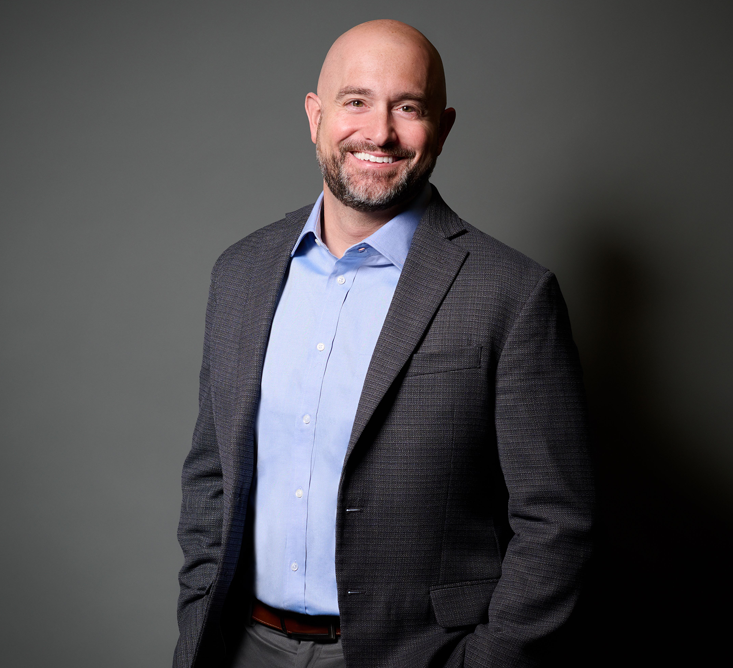
Scott J. Bass
Fractional CMO & Marketing Advisor

The Problem

When marketing is built to produce activity rather than results, spend accumulates without clear return, sales loses trust, and leadership can't explain what marketing is actually driving. This is not a talent problem. It is a structure problem, and the answer is marketing built to drive the business.

The Solution

Every engagement starts with the business goals, not the marketing goals. With 20 years spent as a senior marketing leader inside companies, always reporting directly to the CEO, the perspective is that of someone who has sat at the leadership table, owned the outcomes, and built the case for marketing when the room was skeptical. That includes a practical approach to AI integration, helping teams adopt the right tools to drive efficiency and strategic focus without adding complexity.

Strategy and Prioritization

Most marketing teams are doing too many things and can't explain why. The work starts by mapping every marketing activity back to a specific business goal, cutting what doesn't connect, and building around what does. The result is a team that can say no, stays focused, and stops mistaking activity for progress.

Brand Positioning

When every competitor sounds the same, positioning becomes the difference between winning on value and competing on price. Having taken highly technical, complex businesses and repositioned them around what their products actually make possible, the focus is on shifting perception, sharpening messaging, and moving buyers before the sales conversation even starts.

Marketing and Sales Alignment

Sales doesn't distrust marketing because marketing isn't working hard. They distrust it because marketing hands off leads and walks away. The work builds the process that keeps both functions in the same lane, shared criteria, coordinated execution, and joint accountability for what happens after the lead is generated.

The Outcomes

Marketing that leadership can finally point to as a driver of business growth.

Priorities tied to pipeline and revenue, a sales team that trusts and uses what marketing produces, and positioning clear enough to differentiate in a crowded market. Leadership that can confidently answer what marketing is driving and why it matters.

The companies that treat marketing as a growth function consistently outperform those that don't. The ones that don't eventually face the same question: what has marketing actually been doing?

hand drawing graph chart and business strategy as concept
Business man looking at bright light bulb in the wall concept

Why Fractional

Senior marketing leadership when you need it, without the overhead of a full-time hire.

Many B2B companies need senior marketing leadership but are not ready for, or do not require, a full-time CMO. A fractional engagement delivers the same strategic thinking, executive perspective, and hands-on leadership at a fraction of the cost and commitment. Every engagement is tailored to what the business actually needs, whether that is building a marketing function from the ground up, fixing one that has lost its way, or sharpening strategy and positioning at a critical moment of growth. The result is senior marketing leadership fully accountable to business outcomes, without the overhead, the ramp time, or the long-term commitment of a full-time hire.

About Scott

Making marketing accountable for business outcomes has been the common thread across my 20 years of senior marketing leadership, always inside the business, always reporting directly to the CEO.

Most recently serving as SVP of Marketing at Affiliated Distributors, a $100B independent distributor network, reporting directly to the CEO. Leading a 30+ person marketing organization, modernizing marketing operations and technology, introducing new lead generation programs, and serving as a founding member of the company's AI governance committee.

Before that, eight years leading global marketing at Edmund Optics, a global leader in optical components and imaging technology. Repositioning the brand, driving digital transformation, and delivering significant incremental revenue by aligning marketing directly to revenue rather than activity. During that time also serving on the board of SPIE, the International Society for Optics and Photonics.

Eight years leading marketing at MRINetwork, at the time one of the largest executive search franchise networks in the world, and its parent company CDI. That one is personal. Growing up in a family MRINetwork franchise and watching firsthand how credibility, trust, and relationships build businesses shaped a core belief: marketing is not a function that produces things. It is a driver of commercial outcomes.

Across all of it, the pattern was the same. Marketing structured as a support function will always struggle to earn trust, influence strategy, or consistently drive growth. The companies that win treat it differently.

Scott Bass Speaking

Let's Talk

Email me or schedule a free discovery call and we'll figure out the right starting point together: